
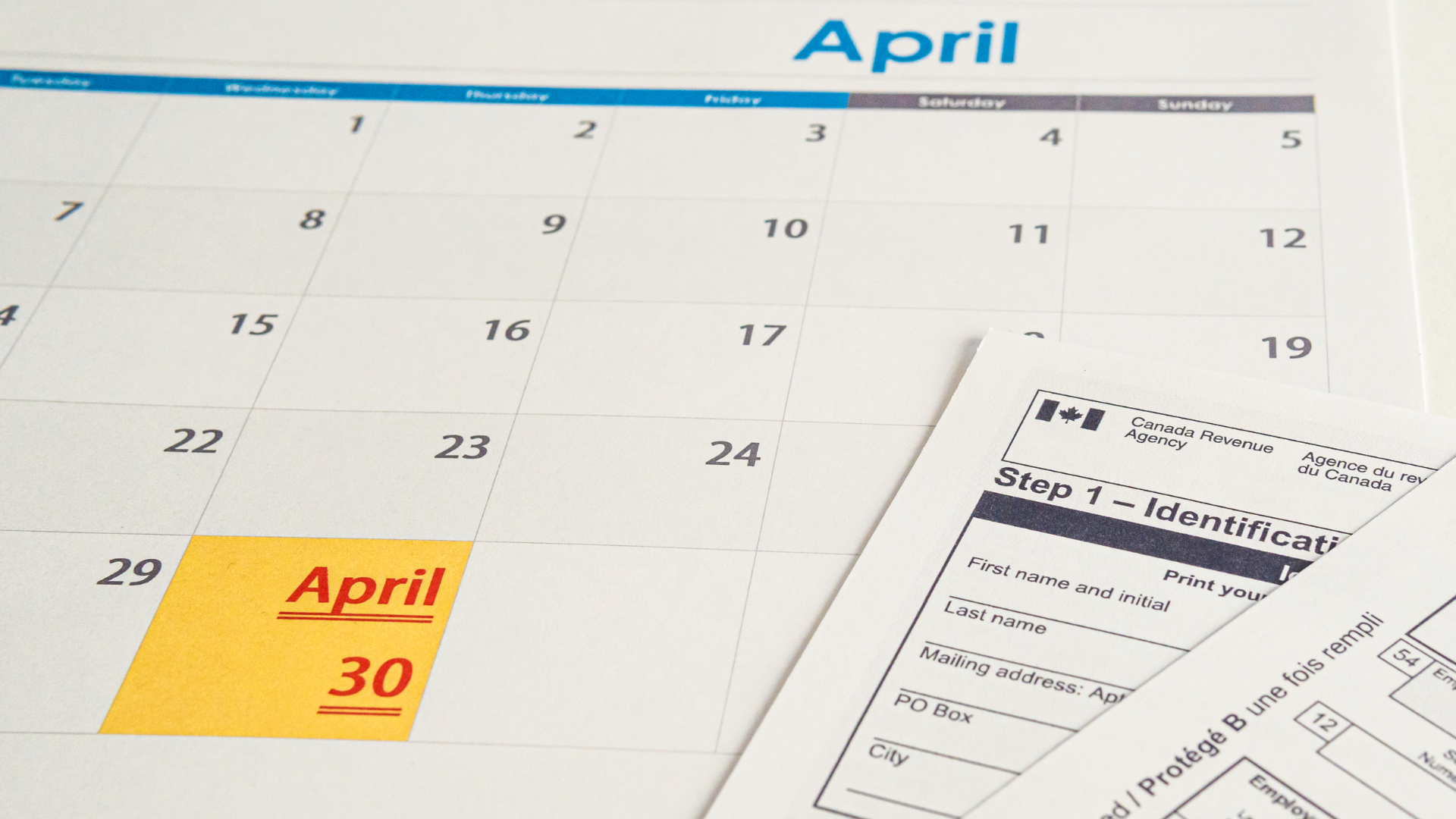
I Missed Filing My Tax Return on April 30, 2026. What to Do in This Scenario?
Scenario: April 30, 2026, the last day for employed individuals to file their 2025 personal income tax return and pay taxes, has passed. Even the June 15, 2026, tax filing deadline for self-employed individuals is gone. Missing a tax filing deadline is a serious matter that should not be taken lightly.
What’s done is done. You can’t travel back in time and make things right.
But you can act now and file your taxes immediately. Because the more you delay, the higher the penalty. You will have to take responsibility, accept the consequences, and be extra careful not to repeat it because a repeatable offence has a double penalty.
The consequences of late filing will depend on two questions.
1. Did You Have Any Tax Pending?
Before panicking, calculate your taxable amount and see if you have any tax owed for the 2025 tax year. Because if you don’t owe any tax to the CRA, missing the April 30, 2026, deadline may not attract a penalty and interest.
Employed: Employers deduct tax for employees. However, you might have tax on investment and other income. You could consider paying tax proactively when the income is earned to ensure you have no tax dues when you file returns.
Self-employed: Self-employed individuals have to pay advance tax quarterly before the 15th of March, June, September, and December. Many business owners have a separate tax savings account, where they transfer a specific amount for taxes after every income they receive. This is because tax is due from the day you earn the income. They pay whatever balance is in this account before the advance tax deadline. You can also set up a separate account and make payments from there to avoid missing tax deadlines due to a liquidity crunch.
2. What Caused the Delay in Tax Returns Filing?
You didn’t intend to miss the deadline, but met with an unforeseen circumstance beyond your control, such as serious illness, incapacity, natural calamity, death in the family, or any such situation where tax filing was the least of your worries. You have just recovered from the circumstances and returned to normalcy and see that the tax filing is delayed.
The first step is to pause everything that you are doing and file taxes, even if it is late. Use the help of a professional accountant to ensure tax returns are filed correctly. You may face a late filing penalty and daily compounding interest on tax owed.
However, you can apply for the CRA’s taxpayer relief provisions that waive penalties and interest. For that, you have to file Form RC4288, clearly explaining the reason for the delay with specific dates and documentation that supports your explanation. While there is a provision, it is the CRA’s discretion whether to grant relief or cancel your request. But it is worth a try.
Tips to Avoid Late Filing Penalty
The CRA charges a late filing penalty of 5% on the tax owed. On top of that, a 1% penalty on the tax owed is added every month you delay filing returns. Even a $1,000 tax owed can convert into a $50 late filing penalty from the next day of the deadline and further $10 every month of delay up to 12 months. If this is your second late filing in four years, the penalty doubles to 10% and 2% per month up to 20 months.
A good habit is to file tax returns on time, even if you don’t have the money to pay taxes. At least you can save yourself from the late filing penalty.
If the reason for late filing is not funds but forgetfulness, ensure there is no tax owed when you file returns. Set reminders and pay the tax. Do not wait until the deadline. While it ensures tax is paid on time, it saves you from a late-filing penalty, as it is charged when tax is owed.
However, not owing tax does not take you off the hook from filing tax returns. You should still file returns before the deadline to claim any tax deductions, get tax refunds, or income-based government benefits.
Self-employed individuals or individuals with significant investment or dividend income should consider hiring an accountant. A professional accountant can keep you updated with your estimated tax liabilities and ensure the timely payment of taxes and filing of returns.
Pay Advance Tax Before Time
As we said before, tax becomes due the moment you earn income. The CRA gives self-employed individuals a chance to pay that tax in quarterly installments without imposing interest on tax owed. However, if you miss the quarterly deadline, interest is levied on the tax owed at the prescribed rate, which has been 7% since the third quarter of 2025. And this interest is compounded daily.
Advance tax can be paid anytime. You don’t have to wait till the March 15 and June 15 deadlines. You can even pay them on February 4.
Suppose your first advance tax installment is $10,000, and you don’t have enough liquidity. You can pay it in small installments of $1,000 a week as long as $10,000 is paid before March 15. If you are not able to pay the entire $10,000 before the deadline, try to pay it as soon as you can. The objective is to keep the tax owed as little as possible, preferably zero.
This is because the CRA charges the prescribed interest rate on the owed amount, and that interest compounds daily. By paying tax as soon as you can, you reduce the owed tax on which interest is levied.
Online Tax Filing
If you are still filing tax returns on paper, consider registering for My CRA account and start filing online. E-filing is quick, and you can do it from anywhere on a laptop or personal computer that has a stable internet connection. If you do not have access to the internet, you can hire an accountant who can file returns on your behalf online.
File Tax Returns Even If You Have No Income
There is a common misconception that dependents who are not actively earning from business or employment don’t need to file returns. I don’t earn, so why should I file tax returns? While it is not mandatory for you to file tax returns, filing has its benefits. You get access to government benefits like the Canada Groceries and Essentials Benefit (the new benefit replacing the GST/HST credit), the Canada Child Benefit, and the Guaranteed Income Supplement (GIS). Since you are from the low-income bracket, you can get the maximum benefit amount.
Instead of using fear of penalty as the motivation to file and pay taxes on time, consider setting up a process that ensures you never miss a deadline, even if calamity strikes.
Contact Edelkoort Smethurst CPAs LLP in Burlington to Help You Plan For Future Tax Returns
Talk to a professional accountant to help you stay on track with future tax deadlines and adopt healthy tax habits, such as cloud accounting and regular bookkeeping, to simplify tax calculations. The accountant can tell you exactly how much tax you owe in advance and help you save money for the same through better cash flow management. At Edelkoort Smethurst CPAs LLP, our accountants and bookkeepers can provide services such as filing taxes and preparing books of accounts. To learn more about how Edelkoort Smethurst CPAs LLP can provide you with the best small business accounting and cloud accounting services, contact us online or by telephone at 905-517-2297.